K-Pop: The Transformative Power of Technology and Creativity
Innovation, Music and Artistry, in the Harmony of Creation!
Social Media: Pioneering Business in the Digital Age
by Simon N. Meade-Palmer
Introduction
Fashion, once confined to the world of designers and runways, is now undergoing a seismic shift, with technology at the helm. Artificial Intelligence (AI), has emerged as a transformative force in the fashion industry, redefining how we engage with clothing and style. In this extensive exploration, we will navigate through the intricate tapestry, of AI’s multifaceted influence on fashion. We’ll delve into personalized clothing recommendations, sustainability initiatives, innovative design processes, and their real-world applications. Welcome to the era of AI-powered fashion.
Personalized Clothing Recommendations: Your Fashion Companion
The cornerstone of AI’s impact on fashion, lies in its remarkable ability to provide highly personalized clothing recommendations, revolutionizing the shopping experience. In stark contrast to the one-size-fits-all approach of yesteryears, AI tailors its suggestions meticulously, considering individual preferences, shopping history, and even real-time trends. With its in-depth understanding of each shopper’s unique style, AI not only curates outfits that align perfectly with their taste, but also introduces them to new trends and styles, they might have otherwise overlooked. This level of personalization, ensures that fashion enthusiasts, can confidently express their individuality, through their wardrobe choices, all with the guidance of their AI fashion companion.
Stitch Fix’s Data-Driven Couture:
To illustrate, let’s examine Stitch Fix, a trailblazer in the world of personalized fashion. Stitch Fix leverages intricate AI algorithms, to dive deep into users’ clothing preferences, sizes, and style inclinations. The outcome is not merely a collection of clothing items, but a meticulously curated selection, that aligns seamlessly with the user’s unique fashion sensibilities. This personalized touch not only simplifies the shopping experience, but transforms it into a journey of self-expression.
AI’s prowess in this area extends beyond the surface. It delves into the psychology of style, understanding the intricacies of why individuals are drawn to certain colours, patterns, or fabrics. It’s an AI-driven journey, into the depths of personal expression through fashion.
Virtual Try-Ons: Bringing the Fitting Room to Your Device
Virtual try-on technology, driven by the power of AI, represents a transformative leap in the way consumers engage with fashion online. Beyond mere product suggestions, this innovative approach, immerses individuals in a virtual fitting room experience, enabling them to intimately assess, how clothing drapes, complements their body, and suits their personal style, all from the comfort of their device. By harnessing advanced algorithms and computer vision, this technology offers a glimpse into a future, where the uncertainty of online clothing purchases is greatly diminished, revolutionizing the e-commerce landscape, and enhancing consumer confidence in their fashion choices.
L’Oréal’s ModiFace:
Enter L’Oréal’s ModiFace, a pioneer in this domain. Empowered by AI, ModiFace empowers consumers to experiment with makeup, and hair colour options in real-time, all from the convenience of their smartphones. This transcends mere convenience; it obliterates the uncertainty, and hesitation often associated with online fashion purchases. Virtual try-on technology, brings the tactile essence of shopping into the digital realm.
Moreover, AI-driven virtual try-ons are not limited to makeup and hair colour. They encompass the entire wardrobe. Users can virtually try on a vast array of clothing, mix and match styles, and visualize the perfect ensemble without stepping into a fitting room.
Sustainable Fashion: AI’s Eco-Friendly Makeover
Sustainability, once a niche concern, has evolved into a non-negotiable imperative for the fashion industry, driven by a growing awareness, of environmental and ethical issues. In this regard, AI is emerging as a formidable ally, particularly in supply chain optimization. By harnessing the power of AI, fashion brands can not only reduce waste, and minimize their carbon footprint, but also make more responsible choices in materials sourcing, and production processes. This eco-friendly makeover, ensures that fashion aligns with both style and sustainability, meeting the demands of conscious consumers.
H&M’s Data-Driven Sustainability:
Traditional supply chains, have long been marred by inefficiencies, leading to overproduction and surplus inventory. However, AI has the power to revolutionize this landscape. A compelling illustration can be found in the practices of H&M, a global fashion giant. By harnessing AI, H&M can forecast demand with extraordinary precision. It gathers knowledge from a wide array of data outlets, including historical sales records, patterns in weather, and even trends in social media. The outcome? A streamlined supply chain, that produces only what the market genuinely demands, reducing waste, and advancing the cause of sustainable fashion.
The impact of AI in supply chain optimization, extends far beyond inventory management. It delves into the heart of sustainability, by optimizing the selection of materials. AI can analyze the environmental footprint of various fabrics, and recommend the use of eco-friendly alternatives. This data-driven approach, empowers fashion brands to make informed decisions, selecting sustainable materials for their products.
Levi’s Eco-conscious Denim:
Selecting sustainable materials, is another pivotal aspect of fashion sustainability, and AI is an invaluable ally in this endeavour. Consider Levi, celebrated for its denim products, which serves as a prime example of this approach. AI plays a central role in Levi’s commitment to sustainability. It assists in evaluating various factors, including the environmental impact of different fabrics, and the feasibility of recycling processes. This data-driven approach empowers Levi to make informed decisions, selecting sustainable materials for their jeans, and reducing their ecological footprint.
AI’s influence extends beyond the design phase. It permeates the entire lifecycle of a fashion product. From material selection, to production, to recycling, AI ensures that sustainability is not merely a buzzword, but a tangible practice embedded in the fabric of the fashion industry.
AI-Powered Fashion Design: Where Creativity Meets Innovation
The fusion of AI and fashion design, stands as an intriguing convergence of creativity and innovation, pushing the limits of the fashion industry’s potential. Renowned designers, known for their eclectic and unconventional wellsprings of inspiration, are presently encountering an unforeseen ally in artificial intelligence. This collaboration goes beyond the confines of conventional design approaches, empowering designers to access extensive datasets, dissect emerging trends, and explore novel materials and aesthetics on an unprecedented scale.
IBM’s Watson:
IBM’s Watson, a prominent player in this arena, leverages AI to offer designers insights into emerging trends, historical fashion data, and cultural influences. By processing colossal volumes of information, Watson generates suggestions, that can ignite the creative spark in designers. This collaborative dance between human creativity, and AI-generated inspiration is reshaping the creative landscape of the fashion industry.
AI’s role in design inspiration is not limited to trend analysis. It extends into the realms of colour theory, fabric selection, and even cultural symbolism. AI can analyze historical data to discern colour trends over the decades, or recommend fabric choices based on environmental impact. It’s a creative partnership, that stretches the boundaries of conventional design thinking.
Generative Design by Carlings:
Generative design, represents an intriguing frontier, where AI’s influence on fashion creativity is most pronounced. This avant-garde approach, employs AI algorithms to autonomously generate clothing designs. It’s essential to clarify, that generative design is not about replacing human designers; it’s about fostering a symbiotic relationship.
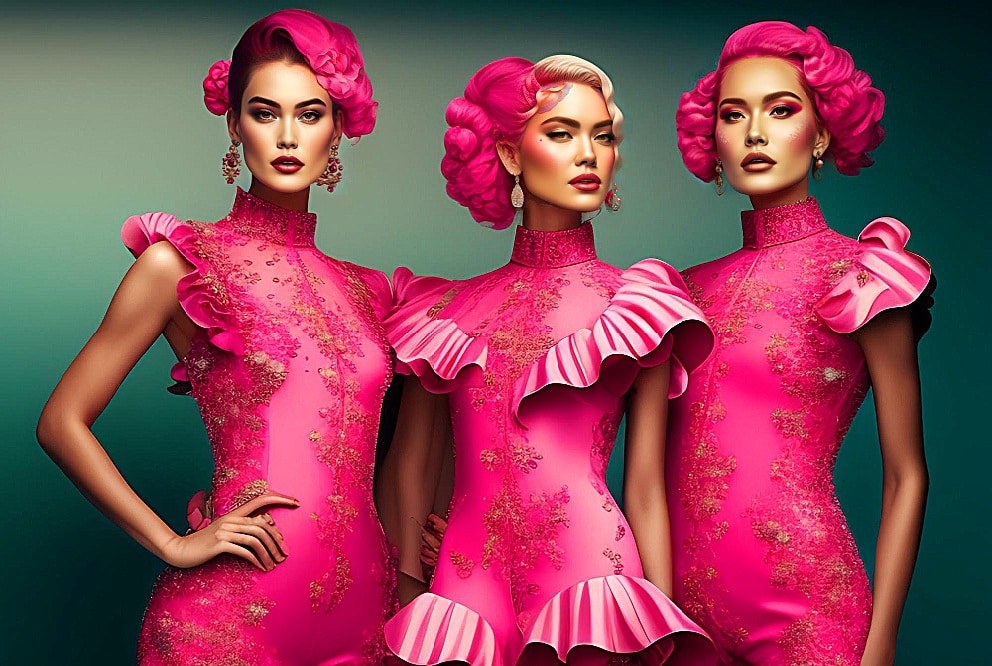
AI-generated designs, act as catalysts, offering fresh ideas and concepts, that designers can subsequently refine and personalize. Carlings, a visionary fashion brand, exemplified the potential of generative design, by creating an entire digital clothing collection, designed entirely by AI. This experiment underscores the harmonious synergy, between human creativity and AI innovation, that is reshaping the fashion landscape.
The marriage of human creativity, and AI innovation in fashion design, is not a compromise; it’s a collaboration. It’s a partnership, that pushes the boundaries of what’s possible in fashion, where the imagination of a designer, is augmented by the inexhaustible wellspring of AI-generated ideas.
Enhancing the Shopping Experience: AI-Powered Convenience
In today’s digital landscape, delivering exceptional customer service, is a crucial component of achieving success in the retail industry, and AI-driven chatbots have emerged as a powerful solution to meet this demand. These virtual assistants, offer a continuous and responsive support system, catering to customer queries and concerns 24/7. They excel not only in promptly addressing inquiries, but also in assisting customers in making informed sizing decisions, and offering creative suggestions for outfit combinations, thereby elevating the overall shopping experience, and fostering brand loyalty.
ASOS’ AI Chatbots:
ASOS, a luminary in the online fashion retail space, seamlessly integrates AI chatbots into its platform. These virtual assistants boast natural language processing capabilities, ensuring seamless, and efficient interactions with customers. They transcend the confines of conventional business hours, offering 24/7 support, and elevating the shopping experience to unprecedented heights.
AI-driven chatbots are not merely programmed algorithms; they are conversational partners. They can understand the nuances of human language, engage in meaningful conversations, and even provide style advice. It’s a revolution in customer service, where the line between human and machine blurs, creating a shopping experience that is not just efficient, but also enjoyable.
Visual Search on Pinterest:
Visual search technology constitutes another revolution, in how customers discover fashion items. It empowers users to locate clothing, by uploading images or leveraging pictures from their social media feeds.
Pinterest’s Lens, stands as an exemplar of AI-driven visual search. Utilizing AI, Lens identifies items in images, and directs users to similar products. This not only simplifies the shopping process, but also inspires users to explore new styles, and fashion possibilities, all grounded in their unique visual preferences.
Visual search technology, is a testament to AI’s ability, to bridge the gap between inspiration and acquisition. It takes the ephemeral moments of style inspiration, whether from a fashion magazine or a social media post, and transforms them into tangible shopping opportunities. It’s a paradigm shift, in how we interact with fashion, where the visual world becomes a vast marketplace waiting to be explored.
Ethical Considerations: Balancing Innovation with Responsibility
The ethical considerations, surrounding the integration of AI in the fashion industry, go beyond mere excitement, necessitating careful scrutiny and proactive measures. As AI-powered systems, become increasingly integrated, into various facets of the fashion world, from design and production, to marketing and customer service, it is crucial to strike a delicate balance between innovation and responsibility. This balance requires a thorough examination of issues, such as data privacy, algorithmic biases, and the impact of automation on labour in the fashion supply chain.
Privacy and Data Security:
AI’s functionality, hinges on the collection, and analysis of data, which engenders legitimate concerns regarding privacy, and data security. Fashion brands must diligently assure consumers, that their personal information, is handled with the utmost responsibility and transparency.
The intersection of AI and personal data, is a delicate balancing act. On one hand, AI relies on data, to provide personalized recommendations and experiences. On the other hand, it must safeguard the privacy and security of that data. It’s a responsibility that requires transparency in data usage, robust security measures, and compliance with data protection regulations.
Addressing Algorithmic Bias:
AI algorithms, if not vigilantly designed and monitored, can inadvertently perpetuate bias. Biased data used to train AI models, can result in recommendations that mirror, and amplify pre-existing biases, which have plagued the fashion industry. Whether these biases are rooted in race, gender, or body type, fashion brands must commit to mitigating them, ensuring that AI-driven fashion remains equitable and inclusive.
Addressing algorithmic bias is not a one-time fix; it’s an ongoing commitment. It requires diverse and representative datasets, continuous monitoring of algorithmic outputs, and the willingness to make necessary adjustments to ensure fairness and inclusivity.
The Future of AI in Fashion: Infinite Possibilities
Looking ahead to the future, AI’s role in the fashion world appears as an expansive landscape, filled with boundless potential. Emerging trends and innovations, are positioned to usher the industry into fresh realms, of both creativity and efficiency. Anticipated developments, include AI-powered virtual fashion shows, which transform the way we display fashion through immersive digital experiences. Additionally, there are AI-generated personalized fashion blogs, tailored to suit individual preferences, and AI-driven fashion forecasting, that leverages data and algorithms, to redefine how we approach style and trends. These advances suggest a dynamic, and thrilling future, in which AI continues to reshape the fashion sector in significant ways.
Conclusion: The AI-Powered Fashion Odyssey
The role of AI in personalized fashion is nothing short of revolutionary. From personalized clothing recommendations, to supply chain optimization, sustainability initiatives, and innovative design inspiration, AI has permeated every facet of the fashion industry.
Examples, from trailblazing companies such as Stitch Fix, H&M, and Carlings, vividly illustrate, how AI is redefining the fashion landscape. As we forge ahead, the fashion industry stands at a crossroads, compelled to strike a harmonious balance, between innovation and ethics. AI should empower individuals to express their unique style, while respecting their privacy and values.
In this ever-evolving fashion landscape, AI stands as a powerful ally, offering fresh perspectives and possibilities, that promise to reshape the way we interact with fashion, for years to come. As we embrace AI thoughtfully and responsibly, fashion metamorphoses from mere clothing, into a medium for self-expression, and a canvas for values, in an increasingly technology-driven world.
Key Points:
- AI transforms the fashion industry, by offering personalized clothing recommendations, based on individual preferences and real-time trends.
- Virtual try-on technology powered by AI, allows consumers to visualize clothing on their bodies before purchase.
- AI-driven supply chain optimization reduces waste, and promotes sustainability in fashion, by producing only what the market demands.
- AI inspires fashion designers with insights, trend analysis, and generative design, pushing the boundaries of creativity.
- AI enhances the shopping experience, through AI chatbots providing 24/7 support, and visual search technology simplifying item discovery.
- Ethical considerations include privacy, data security, and addressing algorithmic bias in AI applications in fashion.
- Balancing innovation with responsibility, is essential as AI continues to revolutionize the fashion industry.
- The future of AI in fashion, holds promises of virtual fashion shows, AI-generated personalized fashion blogs, and AI-influenced fashion forecasting.
- AI empowers individuals to express their unique style, while respecting their privacy and values, reshaping the way we interact with fashion.
- AI is anticipated to deeply transform, and revolutionize the fashion sector, in ways that are substantial and far-reaching.
(Image source: Freepik.com, courtesy of Sketchepedia)